When Your Teen Drinks
I didn’t think it would be my kid.
That’s the sentence I hear in my head when I replay the tiny moments that, at the time, looked like “normal teenage stuff”: a sudden mood swing, a forgotten homework assignment, a new friend group I couldn’t quite place. None of it screamed underage drinking—until it did. And once it did, I learned a hard truth: drinking trouble rarely announces itself with a marching band. It usually slips in quietly, wrapped in excuses, secrecy, and the belief that “everyone’s doing it.”
If you’re reading this as a parent who’s worried, suspicious, or already dealing with consequences—take a breath. You’re not overreacting. You’re not alone. And you don’t have to choose between being “the strict parent” and being the “cool parent.” You can be the safe parent: clear, steady, informed, and loving enough to hold a hard line.
This is what I wish someone had handed me at the start.
Teen drinking isn’t just “practice for adulthood.” Adolescence is a period of intense brain development, especially in areas tied to judgment, impulse control, and emotion regulation. Alcohol can interfere with that development, and teens are also more likely to binge drink when they do drink—because they’re not sipping at dinner; they’re chasing a feeling, fitting in, or trying to numb something they don’t know how to name.
As a parent, the hardest part is accepting that underage drinking can be:
And yes—sometimes it’s simply curiosity. But curiosity can still land a teen in the ER, in legal trouble, or in a pattern that becomes hard to reverse.
I used to think the “signs” would be obvious: slurred speech, stumbling, passing out. That’s the movie version. Real life is messier.
Here are signs that, in hindsight, mattered—especially when they showed up in clusters:
Behavior and mood
School and routines
Social patterns
Physical clues
A single sign might mean nothing. But if your gut is tapping you on the shoulder repeatedly, listen. Parenting is part intuition, part data gathering—and your job is to protect, not to prove you’re right in a courtroom.
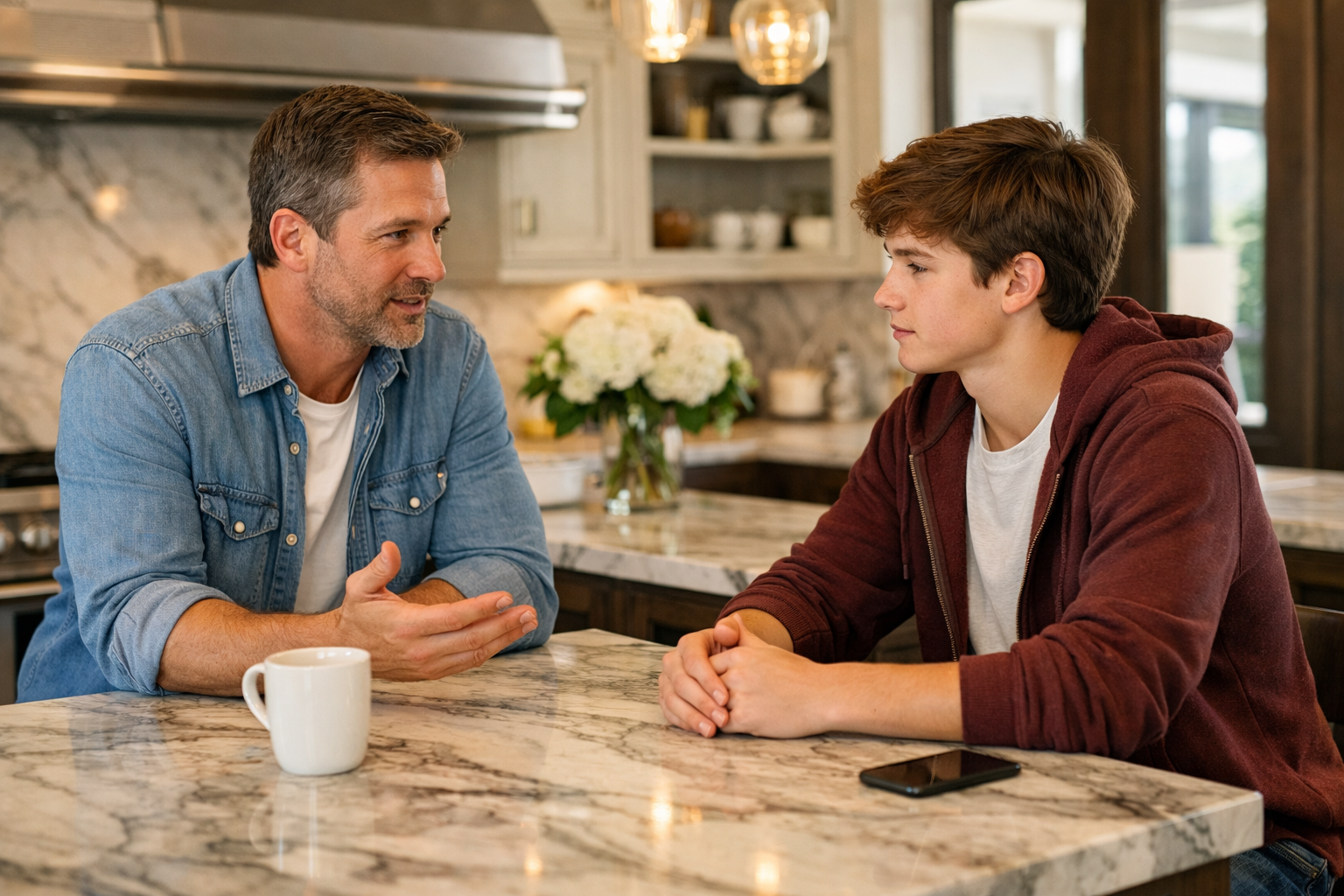
I wanted to start with: “Are you out of your mind?!”
What worked better was starting with: “I’m worried, and I’m going to stay in this conversation.”
A simple structure helped me keep my balance:
If your teen denies everything, don’t get trapped in a courtroom debate. You can say:
“You don’t have to admit anything for us to make new rules.”
That one line kept me from spiraling.
I learned the difference between punishment and protection.
Punishment says: “Pay for what you did.”
Protection says: “We’re changing conditions so it’s harder to repeat.”
Protective boundaries are:
Examples that helped in our house:
And here’s the piece many parents skip: consequences without support can backfire. If drinking is covering anxiety or depression, removing privileges doesn’t build coping skills—it builds resentment.
So I added support requirements like:
If your teen is deeply opposed, you can still set the expectation:
“I’m responsible for your safety. Help is not optional.”
Parents get stuck on the label: Is this normal? Is this addiction?
The label matters less than the pattern and consequences.
It’s a bigger problem when you see:
If you’re noticing these, don’t wait for a dramatic “rock bottom.” Teens don’t need rock bottom; they need early intervention.
If you’re in Ohio and you’re feeling stuck, this can be a practical next step: explore local support for teen substance use recovery through Ohio substance use recovery resources for families. One solid directory or program can turn panic into a plan.
This is the part I wish I’d done before we needed it.
Create a simple family safety plan that covers:
1) The “no-questions-asked ride” rule
Your teen can call for a ride anytime they feel unsafe. You can discuss consequences later—when they’re sober and safe.
2) The party script
Teach them a sentence they can use without losing face:
3) The friend rescue code
A text emoji or word that signals: “Call me with an excuse so I can leave.”
4) The medical line in the sand
If there’s unconsciousness, slowed breathing, seizures, blue lips, repeated vomiting, or you can’t wake them—this is emergency territory. Call for help.
5) Your own calm checklist
When you’re flooded with fear or rage, you’ll forget your best intentions. Write down your “parent script” and keep it somewhere accessible.
A safety plan doesn’t mean you expect failure. It means you value life over appearances.
Once drinking trouble enters your home, it can turn parenting into surveillance. I get it. But if the only thing your teen learns is “avoid getting caught,” you haven’t actually solved the problem.
What helped us was building trust as a process:
One quote I kept coming back to was:
“Connection is not permissiveness. Connection is influence.”
Influence is what you’re after. Not control. Not perfection.
Underage drinking is scary because it touches everything: safety, identity, friendships, mental health, and the future you’re trying to protect. It can make you feel like you’re failing at the job you care about most.
But here’s what I know now: the strongest parenting move isn’t panic or denial—it’s steady action.
Start with what you can do today:
Your teen may roll their eyes. They may slam a door. They may call you unfair.
Let them.
You’re not raising a teenager for this semester. You’re raising an adult for the rest of their life. And sometimes love looks like a hard “no” paired with a relentless “I’m here.”
#Parenting #YouthWellbeing #SubstanceUsePrevention #MentalHealth